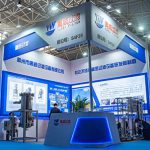
Bioreactor harvest coming off a vaccine production run carries cell debris, host cell proteins, and DNA load that need to come out before the fluid ever reaches chromatography or sterile membrane filtration. Vaccine harvest depth filtration handles that clarification step, and getting the equipment right protects some of the most expensive parts of the whole downstream process. This guide covers what harvest clarification actually demands and why stainless steel plate and frame filters fit the job.
Bioreactor harvest is a mixed load: cell debris from the culture itself, host cell proteins that need removing before purification, and DNA fragments that carry a negative charge and behave differently under filtration than the solids around them. Each component demands something slightly different from the filtration step, which is part of why a single-mechanism filter rarely does the whole job well.
Centrifugation alone leaves a secondary clarification gap. A centrifuge spins out the heaviest solids fast, but fine particles and colloidal material pass right through, leaving harvest that looks clearer than it actually is. That residual turbidity becomes a real problem downstream, where chromatography columns and sterile membranes cost far more than the filtration step meant to protect them. Fouling a column with particles that a proper depth filtration stage would have caught is an expensive mistake that shows up in both cost and lost production time, and it's the kind of mistake that only becomes obvious once the column needs replacing mid-campaign.
Vaccine harvest depth filtration is the clarification step of protein filtration that protects downstream chromatography columns.
When the harvest stream instead comes from a fermenter, the same depth-filtration logic covers fermentation broth filtration, where whole cells and submicron debris must come out before chromatography.
316L wetted parts, mirror polish, and dead-leg-free sanitary design form the hardware baseline for this kind of work. Anything less rigorous becomes a contamination risk that testing after the fact can't fully undo. Our sheet filter line is built around this standard rather than adapted from equipment meant for a different, less demanding job.
Zero-leakage closing systems come in two forms here: manual hydraulic for smaller or pilot-scale runs, and PLC-controlled automation for commercial production needing consistent, logged closing pressure across every batch. Round plate models are built specifically for the medicine industry's strict hygiene limits, where the closed geometry limits any chance of aerosol escape or product loss during a run.

Cellulose and diatomaceous earth matrix media handle high solids loads well, catching particles throughout the depth of the sheet rather than just at the surface. Our diatomite filter line supports this stage for harvest with heavier solids content.
Charge characteristics inside the filter sheet add a second mechanism beyond simple mechanical retention. The sheet matrix actively adsorbs negatively charged DNA and colloids that would otherwise pass straight through a purely mechanical screen, which matters a lot for vaccine work where residual DNA load is a real regulatory concern. Matching media grades to target harvest turbidity, running from coarse for heavy solids up to pre-sterile for the finest work, keeps each stage doing the job it's actually suited for instead of overloading a tight sheet too early in the process.
Scaling up for commercial batch sizes comes down to adding plates rather than replacing the whole system. This modular approach means a plant moving from pilot to commercial scale doesn't need to start over on equipment, just expand the existing frame to increase effective filtration area as production volume grows.
CIP and SIP compatibility of stainless steel frames and FDA-grade elastomers keeps cleaning validation straightforward between batches. Our CIP system supports that cycle without adding manual disassembly to the routine. Essential audit documentation rounds out what a plant needs: material traceability, surface roughness records, and IQ, OQ, and FAT reports all need to be ready and current, since a biopharma plant's own regulatory audit depends on the equipment supplier providing this paperwork promptly rather than scrambling to produce it under deadline pressure.
Video: Yuwei filter workshop and control panel, with ISO 9001 certification noted on screen
1. What turbidity level should a vaccine harvest reach after depth filtration?
A successful depth filtration step reduces harvest turbidity to below 10 NTU, and often below 5 NTU. This perfectly prepares the clarified fluid for downstream sterile membrane filtration and chromatography columns without premature blinding.
For vaccine producers whose clarification train feeds a mammalian culture, the wider choices in cell culture media filtration are worth reviewing before the filter train is fixed.
2. How is the required filtration area calculated for a new vaccine batch size?
Filtration area is calculated using bench-scale Vmax trials to determine capacity per square meter. For commercial production, stainless steel plate and frame filters allow easy scaling by simply adding more plates to the chassis.
3. Can stainless steel plate and frame filters be steam sterilized in place?
GMP-compliant plate and frame filters constructed from 316L stainless steel and FDA-approved gaskets fully support strict CIP (Clean-In-Place) and SIP (Sterilization-In-Place) protocols using hot water or steam up to 121°C.
4. What is the difference between a depth filter sheet and a membrane filter?
Depth filter sheets use a thick, tortuous matrix to trap high solids and adsorb impurities like DNA. Membrane filters act as absolute surface screens for final sterile filtration, but blind instantly without prior depth clarification.
5. Are plate and frame filters suitable for single-use biopharma facilities?
While the stainless steel frames are permanent, the depth filter sheets are disposable single-use consumables. This hybrid approach offers massive cost savings and higher solids capacity compared to fully disposable plastic lenticular pods.