Home > Products > Filter Press > Plate and Frame Filter Press
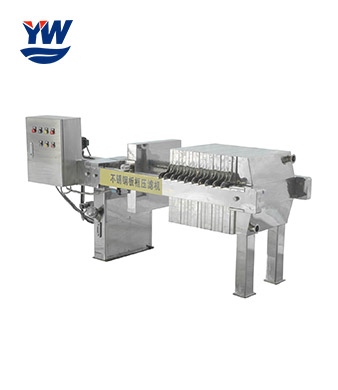
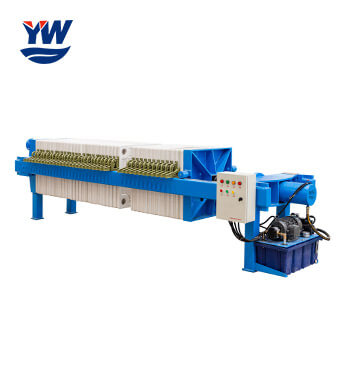
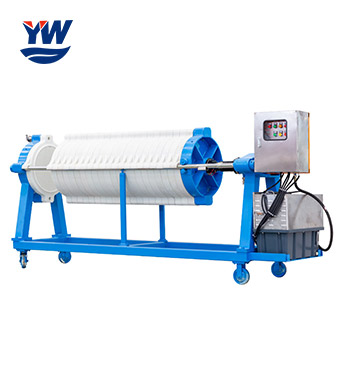
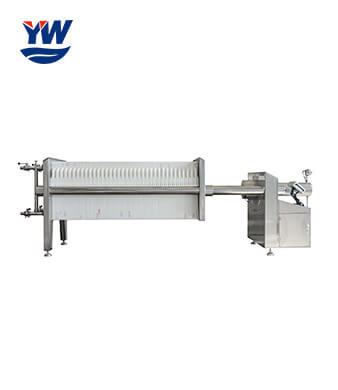
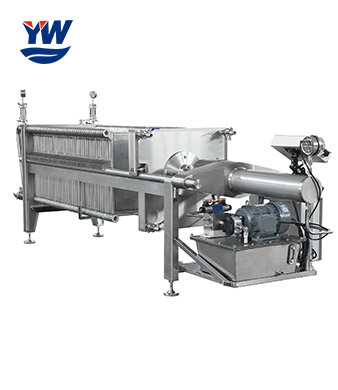
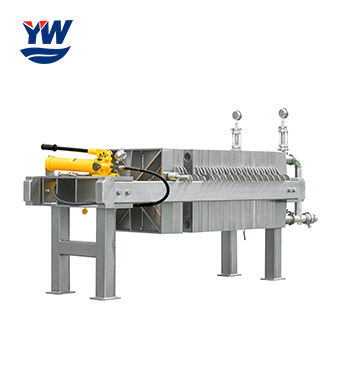
The Plate and Frame Filter Press is a specialized industrial filtration system engineered for high-precision, depth filtration. Unlike standard chamber presses, this configuration utilizes alternating solid filter plates and hollow frames. This unique design allows for the insertion of extremely fine filter media—such as filter paper, cellulose pads, and micro-porous membranes—to achieve unparalleled filtrate clarity.
As a trusted source manufacturer, Yuwei Filtration Equipment designs and builds premium plate and frame filter presses tailored for industries requiring strict hygiene and purity standards. Commonly constructed with high-grade 304/316L stainless steel, our machines serve as the backbone for food and beverage clarification (including beer, wine, edible oil, and sugar syrup), pharmaceutical processing, and fine biotech filtration.
While the heavy-duty dewatering industry predominantly relies on chamber and membrane presses, the Plate and Frame Filter Press remains the absolute gold standard when filtrate clarity is the highest priority. By separating the liquid-holding capacity (the hollow frame) from the structural support (the solid plate), this equipment allows for highly versatile and ultra-fine solid-liquid separation.
The core operating mechanism relies on the alternating arrangement of plates and frames:
Upgrading to a Yuwei Plate and Frame system offers distinct advantages for specific manufacturing environments:
Sizing a plate and frame press requires careful consideration of the hollow frame thickness and the required filtration area. Below is a reference matrix for standard configurations.
| Filter Plate/Frame Size (mm) | Filtration Area Range (m²) | Standard Frame Thickness | Primary Filter Media | Typical Operating Pressure |
|---|---|---|---|---|
| 400 * 400 (Stainless Steel) | 1m² – 10m² | 15mm – 25mm | Filter Paper / Micro-pads | ≤ 0.4 MPa |
| 630 * 630 (Stainless Steel/PP) | 5m² – 30m² | 20mm – 30mm | Filter Cloth / Filter Paper | ≤ 0.6 MPa |
| 870 * 870 (PP/Cast Iron) | 20m² – 60m² | 25mm – 35mm | Filter Cloth | ≤ 0.8 MPa |
| 1000 * 1000 (PP/Cast Iron) | 40m² – 100m² | 30mm – 40mm | Filter Cloth | ≤ 0.8 MPa |
Critical Logistics and Structural Note: When evaluating technical specifications for facility integration, engineers must distinguish between processing capacity and machine mass. The Operating Weight listed in our technical data refers exclusively to the machine’s static physical weight (essential for crane logistics, shipping, and concrete foundation structural stability). It does not reflect the machine’s hourly liquid production capacity or volumetric throughput, which is determined by the filtration area, frame thickness, and the viscosity of your specific fluid.
This technology is explicitly designed for the “polishing” phase of liquid processing:
No. Because the hollow frames lack the solid structural backing of a recessed chamber plate, they are not designed for extreme high-pressure pumping. Standard plate and frame presses operate efficiently at lower pressures (typically 0.3 MPa to 0.8 MPa). If your process requires high-pressure squeezing (e.g., above 1.0 MPa) for heavy sludge dewatering, a Chamber or Membrane filter press is the correct engineering choice.
Filter paper and specialized cellulose pads offer a much finer micron rating than woven or non-woven PP filter cloths. They act as a “depth filter,” trapping microscopic particles within the matrix of the paper itself, rather than just on the surface. This is critical for achieving the crystal-clear transparency required for beverages like beer and wine.
Yes. Our premium stainless steel plate and frame filter presses are constructed with high-grade 304 or 316L stainless steel. The surfaces are meticulously polished (mirror or satin finish) to eliminate dead corners where bacteria could accumulate, making them fully compliant with food-grade and pharmaceutical sanitary requirements.
Once the filtration cycle is complete, the hydraulic cylinder retracts. Operators or an automatic shifting mechanism separate the alternating plates and frames. The solid filter cake, which is neatly contained entirely within the hollow frame, simply drops out, allowing for quick and clean removal.