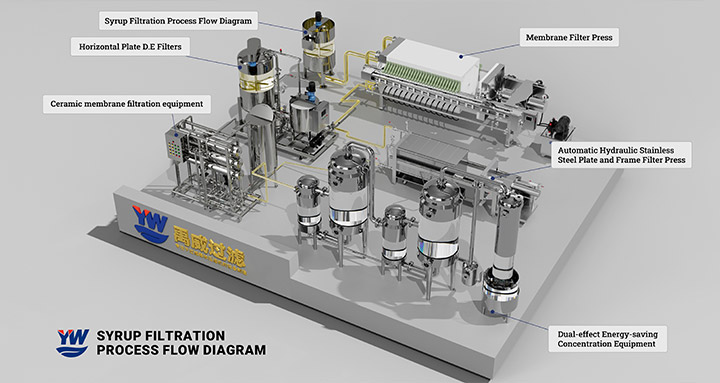
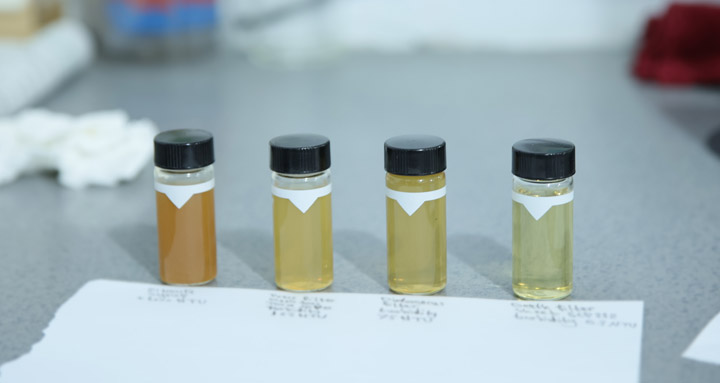
Syrup filtration is a key process in sugar manufacturing, beverage, confectionery and food processing industries. It removes suspended solids, fine impurities, precipitates, colloids and residual microorganisms from raw syrup, effectively improving syrup clarity, purity and shelf life. All our filtration equipment adopts food-grade materials, fully compliant with international food safety regulations. We provide customized coarse filtration, fine filtration and sterile filtration solutions for low to high viscosity syrup.
Sugar Syrup Filtration
Raw syrup coming off a production line carries more than just sweetness. Plant fiber, colloidal particles, protein flocs, pigments, and fine sediment all travel through the extraction or dissolving stage alongside the sugar. If those impurities reach the final product, they shorten shelf life, cloud the appearance, and create off-flavors that buyers notice immediately.
Good syrup filtration solves this in layers. Coarse filtration removes large solids first. Fine filtration then strips out micro-particles and colloidal haze. A polishing or semi-sterile stage finishes the job before filling. Each layer uses different equipment matched to the syrup's viscosity, temperature, and the type of impurity being removed. Skipping a stage or using the wrong equipment leaves visible or invisible contamination in the finished product.
The table below shows how the three main filtration stages connect:
| Stage | Target Impurities | Typical Equipment | Filtration Precision |
|---|---|---|---|
| Coarse Filtration | Plant fiber, large solids, colloidal flocs | Chamber / membrane filter press | 50–200 µm |
| Fine Filtration | Suspended fine solids, residual flocs, pigments | Bag filter, diatomaceous earth filter | 1–50 µm |
| Polishing / Semi-sterile | Residual DE powder, micro-particles, microorganisms | Candle filter, cardboard fine filter | 0.2–1 µm |
Each syrup type brings its own filtration challenge — different viscosity, different impurity profile, different temperature requirements. The equipment selection changes accordingly.
All equipment meets international food-grade production standards. Selection is based on syrup temperature, viscosity, impurity type, and where in the process the equipment sits. Below is a comparison across the main equipment types:
| Equipment | Best Suited For | Automation | CIP Compatible |
|---|---|---|---|
| Chamber / Membrane Filter Press | Raw syrup coarse filtration | Semi / Full auto available | Yes |
| SS Plate & Frame Filter Press | High-temp, high-viscosity syrup | Manual cake discharge | Yes |
| Stainless Steel Bag Filter | Fine filtration, pre-filling polishing | Duplex: continuous operation | Yes |
| Horizontal Disc DE Filter | Decolorization and clarification | Semi-auto | Yes |
| Stainless Steel Candle Filter | Pre-fill semi-sterile polishing | Fully automatic | Yes |
| Cardboard Fine Filter | Final depth filtration, medicinal syrup | Manual | Yes |
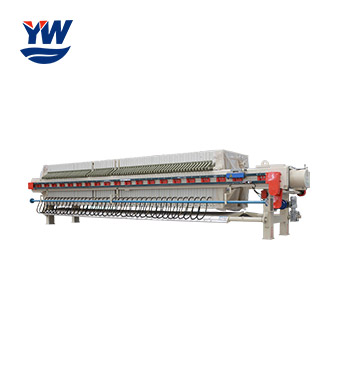
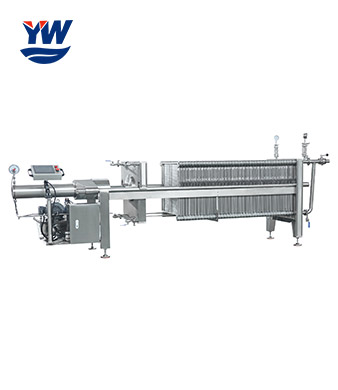
This is the first piece of equipment raw syrup meets after extraction or dissolving. A chamber filter press for sugar syrup handles the heavy lifting — intercepting date residue, plant fiber, colloidal flocs, and coarse solid particles before they reach downstream equipment. We supply both chamber filter press and membrane filter press configurations, fitted with German-standard filter plates designed specifically for food-grade syrup service. The membrane version applies squeeze pressure after filtration, producing drier filter cakes and faster cycle times.
High fructose corn syrup, glucose syrup, and starch-based syrups often run at 55–70 °C with pH values below 5. Standard polypropylene filter press plates are not built for that environment. The stainless steel plate and frame filter press is made entirely from food-grade stainless steel, giving it strong acid resistance and stable performance at high operating temperatures. The trade-off is that the heavy filter plates and plate-frame structure keep automation limited — filter cake is discharged manually. For lines that run one or two filtration batches per shift, this is a proven and cost-effective choice.
After coarse filtration, the syrup is cleaner but not finished. Fine suspended solids and any flocs that passed through the press still need to be removed before filling. The stainless steel bag filter fits here as the workhorse of fine filtration. Filter bags come in multiple micron ratings, so turbidity targets for the finished syrup can be dialed in precisely.
Three versions are available to match different production demands:
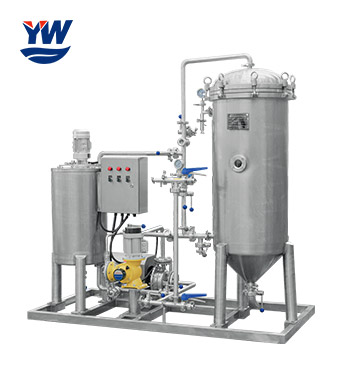
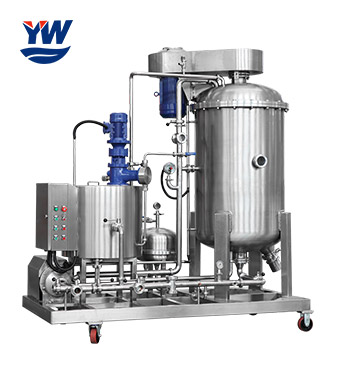
Bag filtration removes particles but it does not address color. Syrup refined from dates, fermented feedstocks, or low-grade raw sugar often carries residual pigments, macromolecular colloids, and protein-derived color bodies that a bag filter cannot capture. The horizontal disc diatomaceous earth filter addresses this with a precoat of diatomite on stacked filter discs. The DE layer adsorbs pigments and colloidal material as the syrup flows through, improving gloss and reducing color units measurably. It sits in the process after coarse filtration and before the polishing stage. Diatomaceous earth filtration for syrup is the standard decolorization method in date syrup refining and fermented syrup clarification lines.
At the end of the process, just before filling, the syrup needs one more pass. The stainless steel candle filter targets what DE filtration leaves behind — residual diatomite powder, micro-particles smaller than 1 µm, and microorganisms that would otherwise compromise shelf stability. This makes it the right fit for premium honey syrup, medicinal-grade syrup, and high-end date syrup where microbiological limits are part of the product specification. The candle filter supports full food-grade CIP online cleaning, keeping downtime between batches short.
The cardboard fine filter is a depth filtration option used as a final polishing step or as a standalone fine filter in smaller-scale syrup lines. Filter cardboard sheets stack between stainless steel frames, providing layered depth filtration that captures very fine particles and some microbial content through physical retention and adsorption. It is a practical choice for pharmaceutical-grade syrup producers who need tightly controlled effluent clarity but operate at lower flow rates where a candle filter would be oversized. Like the other equipment in this lineup, all wetted parts are food-grade stainless steel and the unit is compatible with CIP cleaning procedures.
Viscosity and temperature are the two factors that narrow down equipment options fastest. The table below gives a practical starting point for selection:
| Syrup Type | Typical Viscosity | Process Temp | Recommended Equipment Combination |
|---|---|---|---|
| Sucrose / Liquid Sugar | Low–Medium | 40–60 °C | Chamber filter press → Bag filter → Candle filter |
| High Fructose Corn Syrup | High | 55–70 °C | SS plate & frame filter press → Jacket bag filter → Cardboard fine filter |
| Date / Fruit Syrup | High | 50–65 °C | Membrane filter press → DE filter → Candle filter |
| Malt Syrup | Medium–High | 50–60 °C | Chamber filter press → Jacket bag filter → DE filter |
| Honey Syrup | High | 35–45 °C | Jacket bag filter → Candle filter |
| Medicinal / Functional Syrup | Low–Medium | 20–40 °C | Bag filter → Cardboard fine filter → Candle filter |
If your syrup line runs multiple product types across shifts, the modular nature of this equipment lineup means individual stages can be bypassed or swapped out without rebuilding the whole system. Flow rate, batch volume, and hygiene requirements also affect the final configuration. Our engineering team can review your process parameters and recommend a specific combination before any purchase is made.